The cool, long spring that seemed to extend well into early summer has been displaced by ideal weather, sunny and still in the past few weeks, turning the country golden as grasses go to seed. Haymakers have been busying with the harvest, creating a patchwork of mown and unmown paddocks. The feeling of high summer is here. Roadsides are in flower with wild carrot and ox eye daisies, dogwood (Cassinia) and the last of the Christmas bush (Prostanthera lasianthos). Blackberry canes arch over laneways, turning white with dust from passing traffic.
Today we have a hot day forecast and apart from watering the pots in the nursery and the vegetable garden, I will not intervene anywhere else in the garden trusting the plant selection and mulching regime to keep the plants alive. Anything that does not look its best at the end of the day, will be the result of an error of judgement in the past. Such as the Wachendorfia that is so in keeping visually with the yellows and oranges of the bed with the golden sage, but that is far too much a water hungry lover of heavy soils, for that particular location in my garden that is largely free draining volcanic red soil. I might try it somewhere near the citruses, which are growing in heavier clay loam.
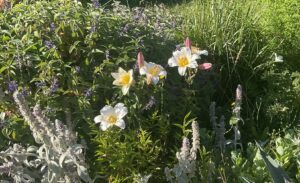
It is a good time to take stock of what is doing well too. I have grown more confident growing liliums in the past few years, inspired by people like Simon Rickard and Amanda Oliver who have long used them as colourful accents in their texture rich designs. I realise that they are not as water hungry and hard to care for as I had originally thought. I have planted them in amongst herbaceous perennials for the most part, trusting them to thrust up through the foliage and stake a place for themselves. Feet in the shade, faces in the sun seems to be maxim for liliums as much as it is for clematis. And I also grow them in pots, which I bring up from the nursery when in bloom, and place around the house. Some liliums are endowed with an overwhelming fragrance that can be hard to deal with as a cut flower when brought into the house. But others seem to have lost the scent in the breeding process. There are such a number of different hybrids and cultivars on top of the various garden worthy species. It is worth checking out the specialty bulb sellers such as Tonkins to track down the rare and the unusual.
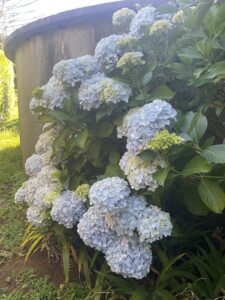
The hot weather today might well be a turning point for old stalwarts of the country garden. Hydrangeas for example, without additional water can suffer from scorched flowers and leaves from one hot day. I grow a small number in a south facing bed protected to some extent by a grove of Japanese maples. The ones that flower best are on the margins where they get full sun, which is a risk on a day like today. I remember my grandmother, dutifully watering all her blue flowering hydies to protect them and I probably should too, but these descendants of her plants will have to do the best they can. Such overblown, old fashioned plants are hard to justify in a modern garden design, but there are numerous smaller cultivars that are useful if conditions are ok.
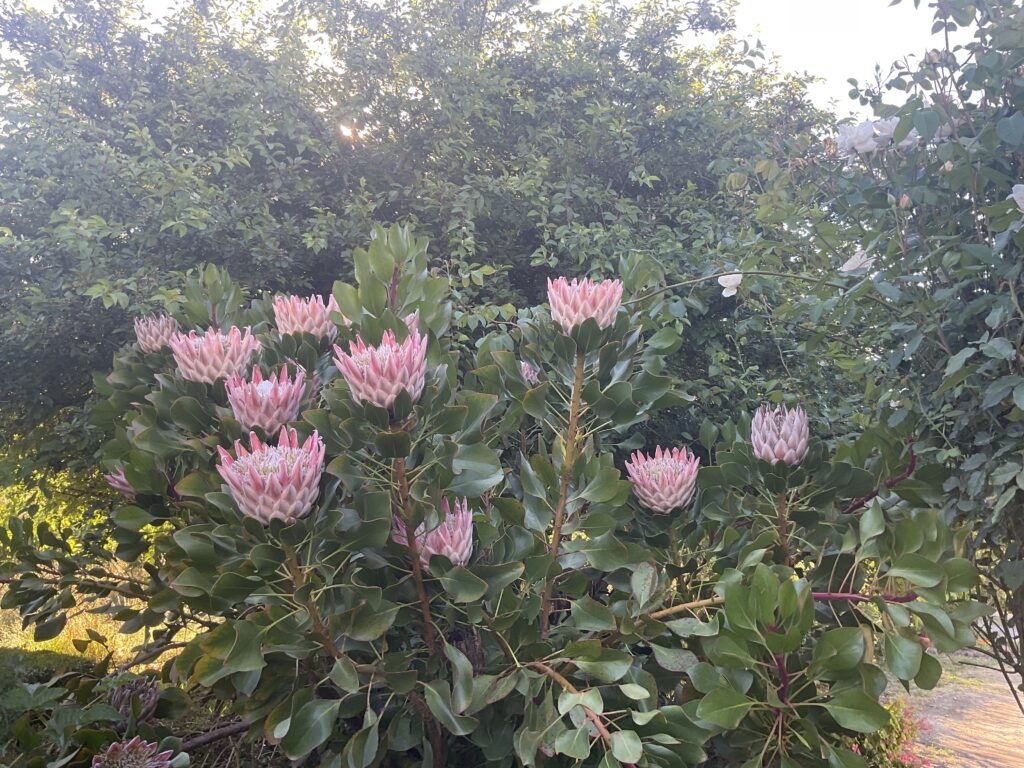
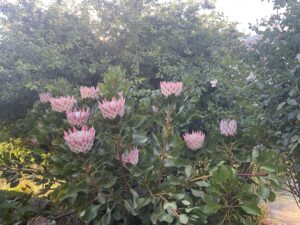
Plants that do not need additional watering , such as the king protea will get by just fine. These hardy plants have been flowering since early summer and some of the sculptural flower heads are starting to brown off. within the next few weeks, I will get itchy fingers and start to dead head them in the interest of future plant health and abundance of flowers. This particular bush was here when I arrived 26 years ago and annually I cut back the spent flower heads as low as I can, sometimes to the very base of the plant, leaving all the upright, non flowering stems, which will provide next year’s floral display. Any stems that are growing at jaunty angles are also removed to maintain the shape of the bush and to protect other plants nearby from overshadowing.
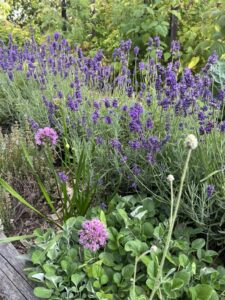
 The lavender hedge that grows at the top of the retaining wall next to the house here at Clear Springs is comprised of a smaller variety with the most vivid purple hue known as ‘Hidcote’. It replaced an overgrown and leggy planting of Miss Donnington, which had not always been carefully tended. The smaller hedge has allowed me to plant other smaller perennials in the space bedetween the hedge and the top of the wall, plants that would get lost if I grew them elsewhere in the garden. The standout winners in this repeat planting combination are the dwarf purple iris, Centaurea ‘Bella’ whose foliage looks great all year round, and the ever reliable Allium ‘Millenium’. The free drainage in this part of the garden is a boon for these plants who are very drought tolerant. The fact that they border the vegie garden though means they receive incidental irrigation, which keeps them fresh and flowering for longer.
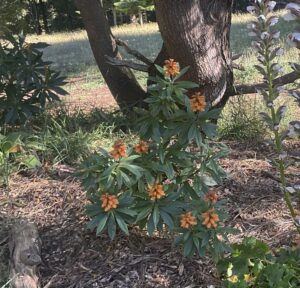
As my garden matures, I have started to appreciate more those intrepid plants that will flower in the shade. At the end of the olive grove, with its windbreak of blackwood and stone pine, I have three Isoplexis ‘Isabelliana’ growing directly beneath a great blackwood. These woodland plants from the Canary Islands, took a few years to really establish themselves, which is hardly surprising considering their giant neighbour.
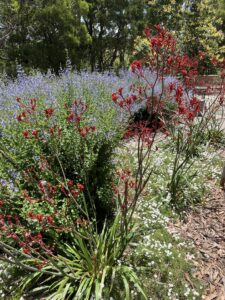
 The show stoppers in a few of the gardens we look after are the ‘Landscape Red’ kangaroo paws, which are ablaze right now, this one here is planted with Salvia ‘African Skies’ and a white form of Brachyscome. Mass planting is highly effective and the flowers last for months and the plants last for years, requiring only a thorough deadheading at the end of the season.